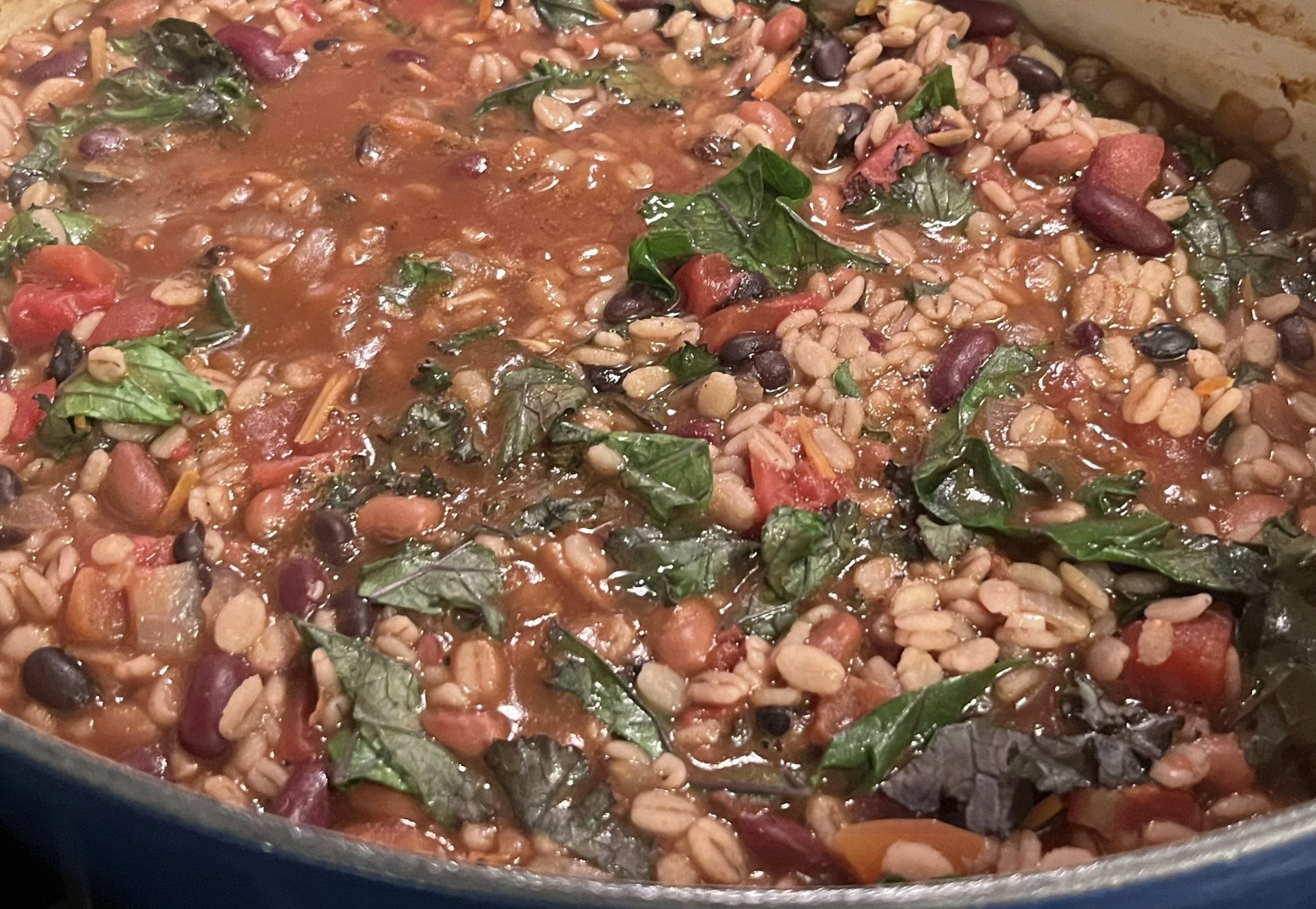
A good hearty stew is an indispensable recipe for any home cook. Of course, there are so many traditional versions of the concept, some of which I personally count among my favorite recipes of all time (Hungarian goulash, coq au vin, chile Colorado, just to name a few). The goal of this recipe is to make something in the same vein of those dishes that captures the feel of a classic, rich stew, but that leverages nutrition and food science to create something incredibly nutritious and highly versatile that’s convenient to make day-of or to meal prep in a large batch.
Tomato, bean, and barley evokes Mediterranean-style grain and legume soups, Southwestern US chilis, and modern bean and grain bowls. This stew borrows from each of those culinary styles without settling into any one of them. It’s a balanced, complex, savory dish that can stand well on its own without any added meat but also serves as a fantastic side dish or base to a protein of your choice. For a health-optimized approach, I recommend adding in some pulled chicken or a lean, high-protein veggie or poultry sausage or serving a cup of this stew alongside a white meat or tofu main. Vegetarian-inclined readers will note that the recipe can be easily made vegetarian with careful ingredient selection. See the note at the end of the ingredient list for details.
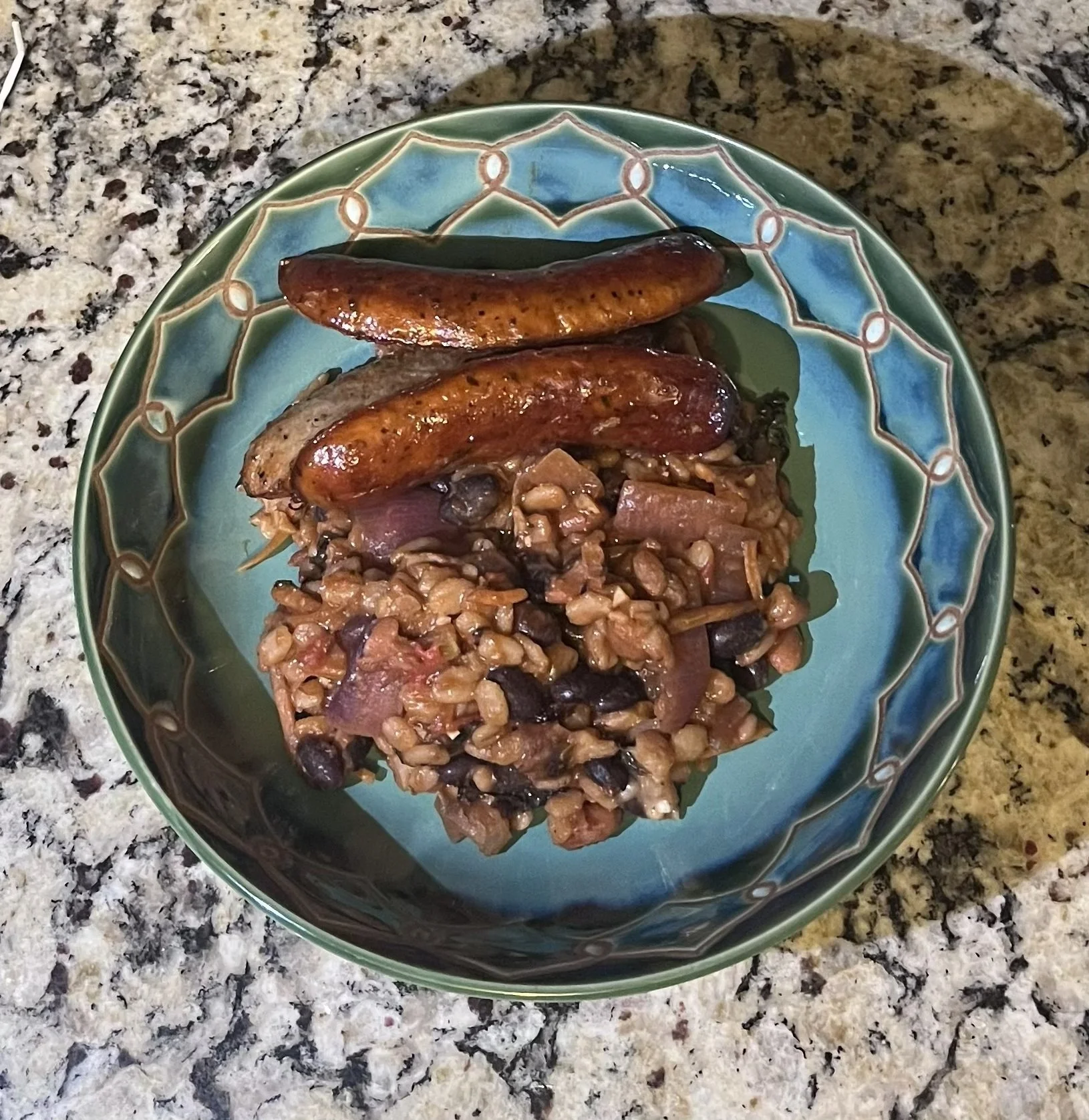
A low-calorie but filling portion, serving as a base for poultry sausage.
As a stand-alone meal, the stew is a bit high in carbs (a double portion ends up with a slightly high glycemic load). If you’re fueling for high-energy activity, this is not a problem, but if you’re aiming for a moderate level of carbs in your macro plan, you should definitely consider this to be a side as laid out above.
The carb profile of the dish is varied, with beta glucans, resistant and complex starches, and plenty of fiber. Sugar is minimal and almost entirely sourced from minimally processed plant sources. As a result, the glycemic index nets out to about a 31, which is well below the “low GI” threshold of 55, making this a solid carb option for people concerned about blood glucose.
The combination of grains and legumes in this dish is tailored to form a complete protein, with the legumes’ lack of sulfur-bearing amino acids (methionine and cysteine) made up for by the barley. The parmesan and nutritional yeast also add complete protein content to help boost the numbers, which end up pretty respectable, for a side dish. Of course, the parmesan adds some saturated fat, but the use of plant proteins and avocado oil in the rest of the dish accounts for this, bringing the percentage of calories from saturated fats under standard health recommendations.
It’s economical, too. At the time of publication, my estimate places the cost of ingredients at under $3 per serving, and potentially under $2, if you shop budget brands. Even using the higher option of the two, you’re looking at around a penny per calorie.
Nutrition Info
The entire recipe comes in just under 2500 calories. I’ve divided it into approximately 300-calorie portions, which is quite hearty for a side dish. Adding a protein-forward main dish to this should create a pretty balanced meal, while simply doubling it into a ~600-calorie serving is also perfectly serviceable. It’s relatively carb-heavy, so I generally recommend it as a side or as a vehicle for a simple protein drop-in, like shredded chicken, high protein veggie sausage, etc.
Calories per Serving: 294 (8 servings)
Quality-Corrected Protein: 12g (raw total of 14.4g, corrected for 0.83 protein quality score)
Net Carbohydrates: 35g (48g total, minus 13g fiber) Glycemic Index 31, Glycemic Load 11/serving
Fat: 6g (<2g saturated FA, 5.8% of calories)
Micronutrient coverage is quite good, especially for copper and vitamin K. Of the major micros, only vitamins D and B12 are low, as is to be expected from a very plant-forward recipe.
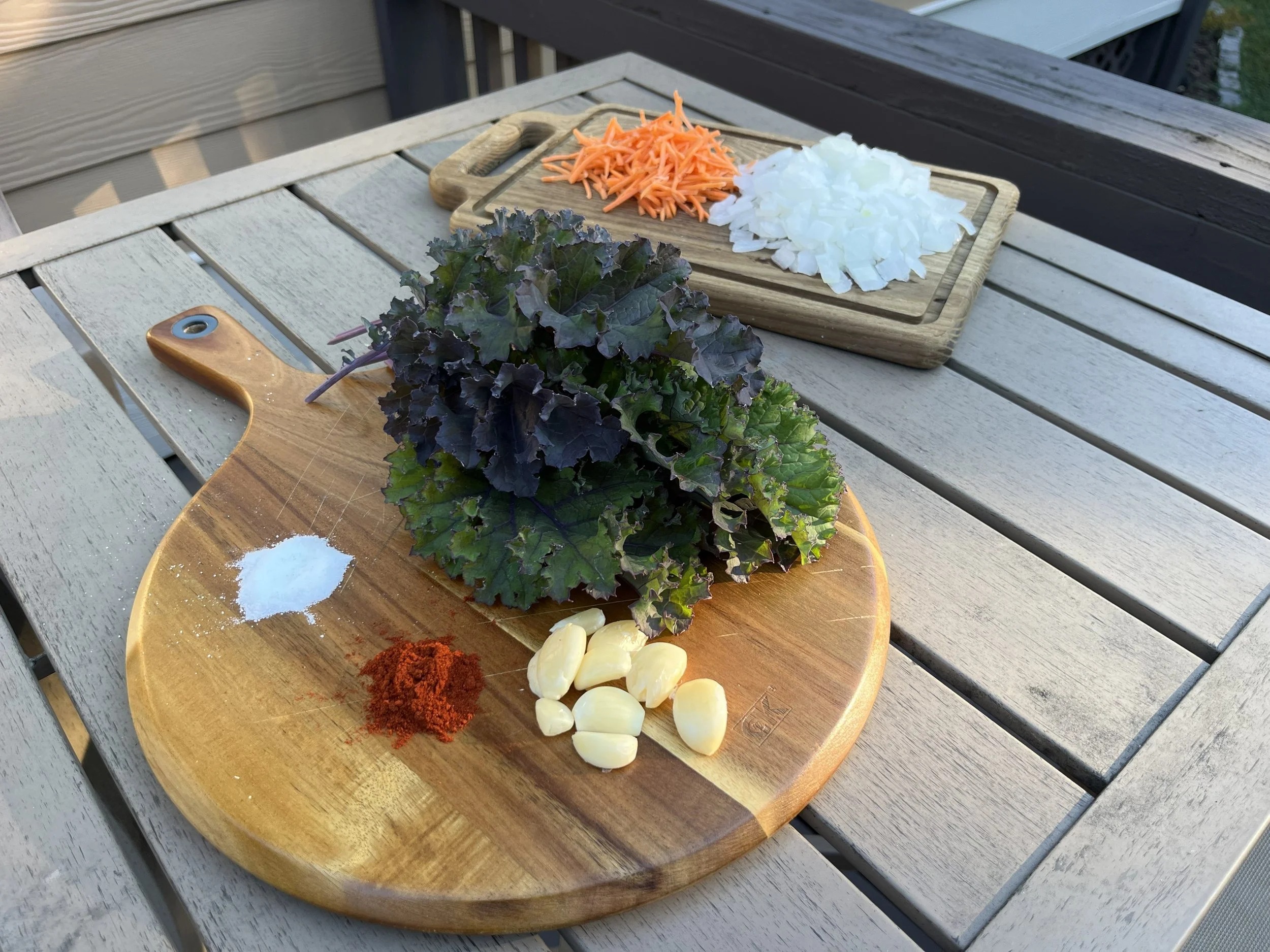
Ingredients
175g (approx 7/8 cup) Pearled Barley (dry weight)
1 455g can Black Beans, drained to 255g
1 455g can Pinto Beans, drained to 255g
1 411g can Diced Tomatoes
32g (2tbsp) Tomato Paste
1 approx 300g jumbo Onion (diced)
1 approx 40g bulb of Garlic (minced)
Approx 120g (2 medium equivalent) Carrot (shredded)
1 approx 200g market container (shiitake, baby bella, or similar) Mushrooms (diced)
150g bunch Kale
20g (4 tsp) Avocado Oil
60g Parmesan (grated)
16g (1/4 cup) Nutritional Yeast (recommend vitamin B fortified)
710g (approx 3 cups) Roasted Vegetable Stock (low sodium preferred)
(optional) 120g (1/2 cup) Dry Red Wine
15g (1 tbsp) Apple Cider Vinegar
17g (1 tbsp) Worcestershire Sauce
14g (2 tbsp) Smoked Paprika
2.5g (1 tsp) Black Pepper
(optional) pinch Cayenne
Salt (to taste)
2 Bay Leaves
Other herbs/sachet d’epices if desired
Sodium Note: The recipe assumes the beans are drained and rinsed. Salty bean canning liquid, plus full-sodium broth may result in an over-salted stew, especially after adding parmesan. If this is the case, consider using less broth and diluting it by adding water to account for the lower liquid volume. If you’re using low-sodium beans, you can keep the canning liquid if desired, as well, but this will alter the liquid balance.
Vegetarian Note: The only ingredients that are not vegetarian are the Worcestershire (due to the presence of fish), parmesan (due to the rennet), and possibly the wine, depending on clarifying agents that may be used. If a fully vegetarian recipe is desired, the Worcestershire can be replaced with any umami-rich sauce (such as low-sodium soy sauce), and a vegetarian savory aged hard cheese can be used. Some non-traditional parmesan does not use animal-based rennet, so look for something in that vein. And obviously, look for a vegetarian wine, if you’re being strict.
Quick Overview
If you want the full technical description, read on below. But the quick and dirty version is basically this:
1. Sauté vegetables in oil, starting with mushrooms, then carrots and onion, then tomato paste, ending with garlic. Along with the garlic, bloom the spices for about a minute before deglazing with wine.
2. Add stock, tomatoes, beans, and barley. Stir, bring to a simmer, and add salt to a barely-perceptible taste. Add herbs and keep on a low simmer for 45 minutes.
3. Remove from heat, remove bay leaves and sachet d’epices, and stir in kale, parmesan, nutritional yeast, Worcestershire, and apple cider vinegar. Rest for several minutes, taste, and make any necessary final adjustments.
Prep
There’s very little deep prep unless you’re making your own stock or using dried mushrooms. When making homemade stock for this recipe, use cast-off cuts or whole vegetables, if necessary, consisting of mirepoix, garlic, and any other hearty roasting vegetables to hand. The roasting and simmering process combined should take a couple of hours, and I won’t go into that in detail here. (Message or comment if you’d like a short article to that effect.) For dried mushrooms, you’ll want to rehydrate them well in advance of cook time to dry excess surface moisture on a paper-towel-lined plate or similar configuration. If using this technique, rehydrate the mushrooms in some of the broth that will go into the stew, then re-add it to the rest of the broth to retain all the mushrooms’ flavor.
Stem the kale and chop it as coarsely as desired, bearing in mind that the leaves will shrink significantly during cooking. Dice the mushrooms and onion according to your preference. Again, these will shrink down (especially the mushrooms), so a coarse chop is usually good. If you’re using whole carrots, these can either be julienned or shredded, but I usually just buy them shredded these days. The garlic should be finely minced close to cook time (about 10 minutes prior), and if you don’t mind doing a little knifework while the other vegetables cook, you can leave them in cloves for now. (Do remove the paper and cut the ends and any undesirable sections beforehand, though.) Similarly, the parmesan can be left on the block for now if desired, since it’s added at the end of the cook time.
Mise en Place
Get your preferred stewing vessel (a thick-bottomed stock pot or Dutch oven, ideally) and a good wooden spoon handy. Optionally, you can use a sauté pan as well, but this is not necessary if you prefer a one-pot method. See the technique section below for details. In either case, make sure that your sauté-stage cooking vessel has a lid.
Arrange ingredients according to the order of addition.
Keep the avocado oil and a couple of teaspoons of salt handy for the vegetable searing process. Note that the amount of salt added to the entire dish will depend heavily on the sodium in your specific stock and canned vegetables, hence why there is not a total amount recommended in the recipe. See the technique section later for details on overall salt level adjustment. For now, just keep a few teaspoons in your mise en place to add during the sauté. Note that salting the vegetables before cooking will cause a high degree of softening due to cell wall breakdown, so wait until they’re on the heat.
The mushrooms will go first, on their own. These are followed by the carrots and onions, which can share a bowl, if you like. As can the fat-soluble spices, which include the smoked paprika, black pepper, and cayenne, if you’re using it. Your garlic and tomato paste will be the last ingredients to go in before you deglaze. This is where the wine comes in, if you’re using it, or you can use a half cup or so of additional stock or water instead, if you’re not.
After your sauté and deglazing ingredients are all situated, the simmering ingredients are much less finicky. The stock, beans, tomatoes, and barley will all be going in after the deglaze and simmering together for a while, so it’s not crucial what order they go in. (Do transfer the beans to a colander and rinse them before adding them to the pot, though, unless you’re using low-sodium beans and choose to skip that step.) You could even put these all in a pot together, if you want to use a sauté pan and then transfer to the stock pot (or Dutch oven etc.) once the deglaze is finished. I generally use a single pot, though, so these ingredients will be added in together at that point.
Finally, the finishing ingredients can be set aside until the end of cooking. The simmer time on this stew is about 45 minutes, which gives you plenty of time to prepare the kale, parmesan, nutritional yeast, Worcestershire, and ACV once you’ve done some cleaning and the like.
Full Technique
Before we get started here, I’ll briefly mention the sauté pan version of the dish. This way of doing it has some tradition behind it, and it’s preferable to some who like to use sauté pan technique when sweating vegetables for stew. The idea is to put your simmering ingredients into one pot and your sauté ingredients into another pan initially, then transfer them to the pot after deglazing. This works fine, but it requires an additional cooking vessel, so I don’t often use it. I’ll proceed with the technique for the one-pot version, but it should be simple enough to follow along if you’re using a sauté pan.
First, bring your cooking vessel up to between 350 and 400 F. If you don’t have an instant-read thermometer handy, this corresponds to about medium-high heat or the lower end of water-beading temperature. Once this temperature is achieved, add about 2 tsp of oil, or just enough to coat the bottom of the vessel. The oil should shimmer, but not smoke. If it smokes aggressively, it’s burned, and you’ll have to start over at a lower temp.
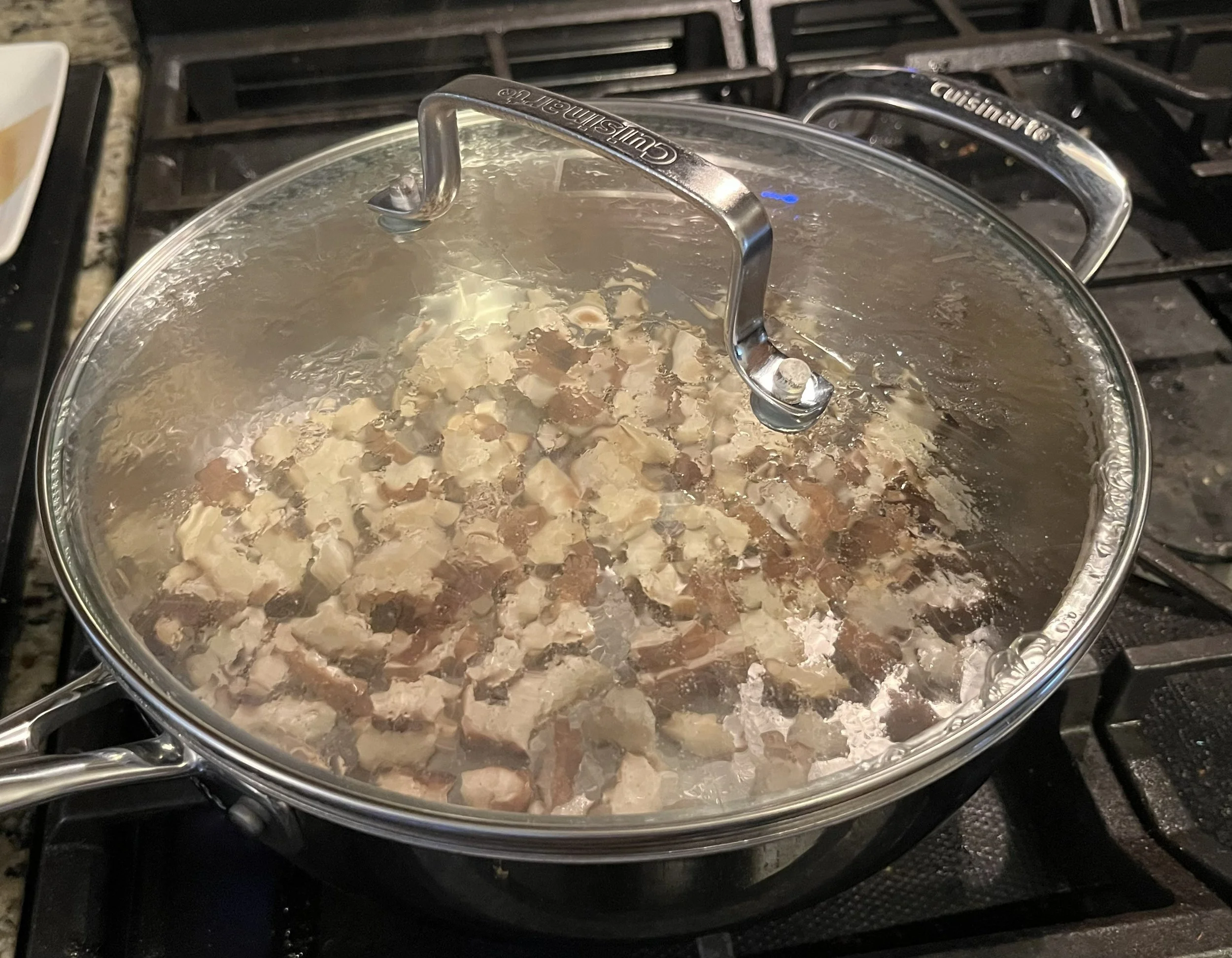
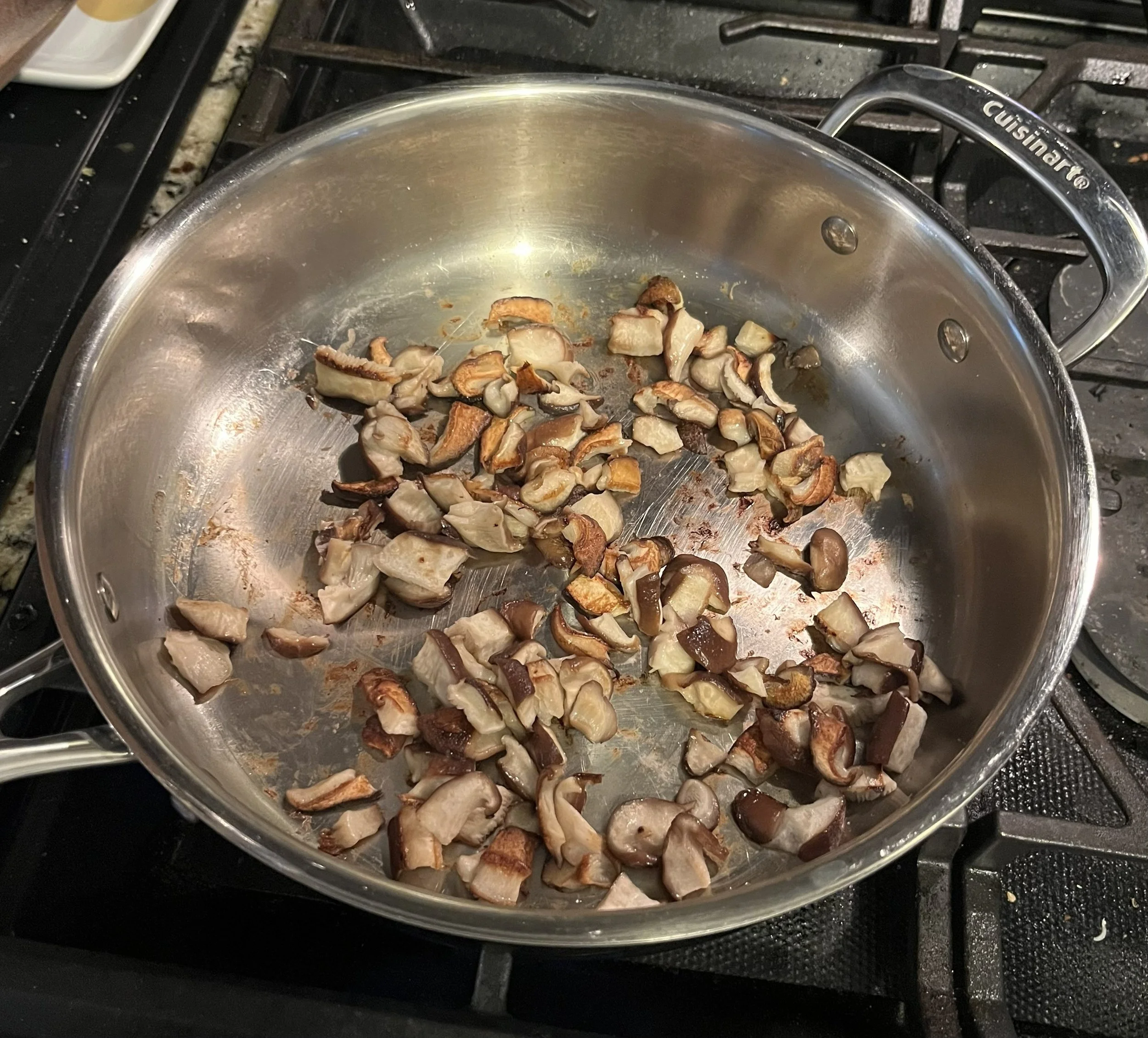
Add the mushrooms and a pinch of salt, and put the lid on the vessel, keeping the heat on medium-high. If you haven’t minced your garlic yet, now is the time to do it. After between 5 and 10 minutes, the mushrooms should release their liquid and start steaming aggressively. Once they’ve shrunk down and there’s a lot of steam in the pot, uncover it, being careful to let the steam escape safely.
Add your carrots and onions with another pinch of salt and the rest of the oil. Stir and/or sauté for a few minutes until the vegetables begin to brown.
After some significant browning has occurred, add your tomato paste and stir. Then, after a few minutes, when the paste begins to darken in color, add spices and garlic, then stir until all ingredients are coated in oil. Have your deglazing liquid handy, because this is a very quick cooking stage. After around 45 seconds, the tomato paste and spices should take on a darker red color, and the aromatics should be very fragrant. Quickly add your deglazing liquid (wine, stock, or water) to the vessel at this point. If you wait several minutes, you could burn the delicate aromatics. (So don’t do that).
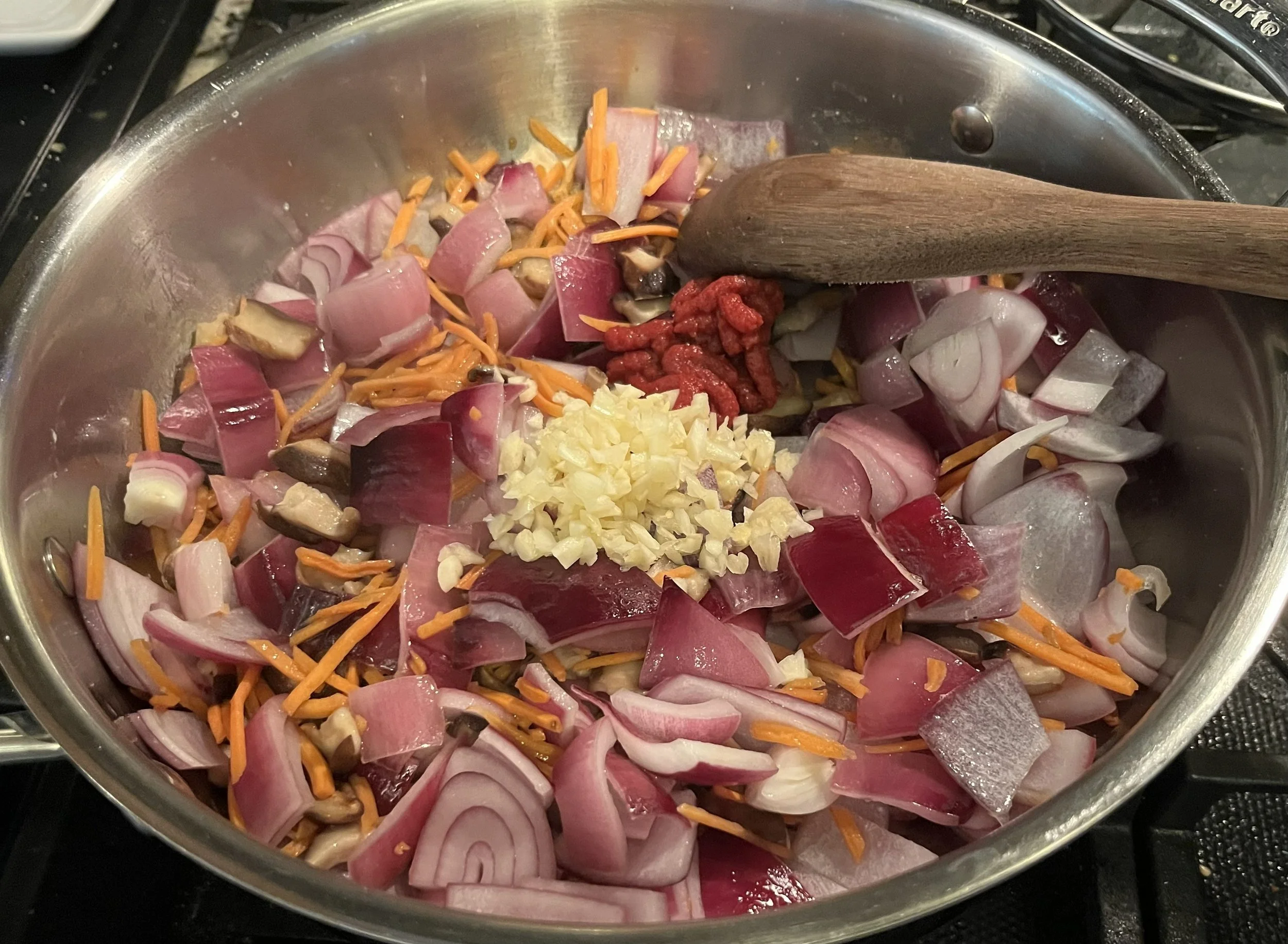
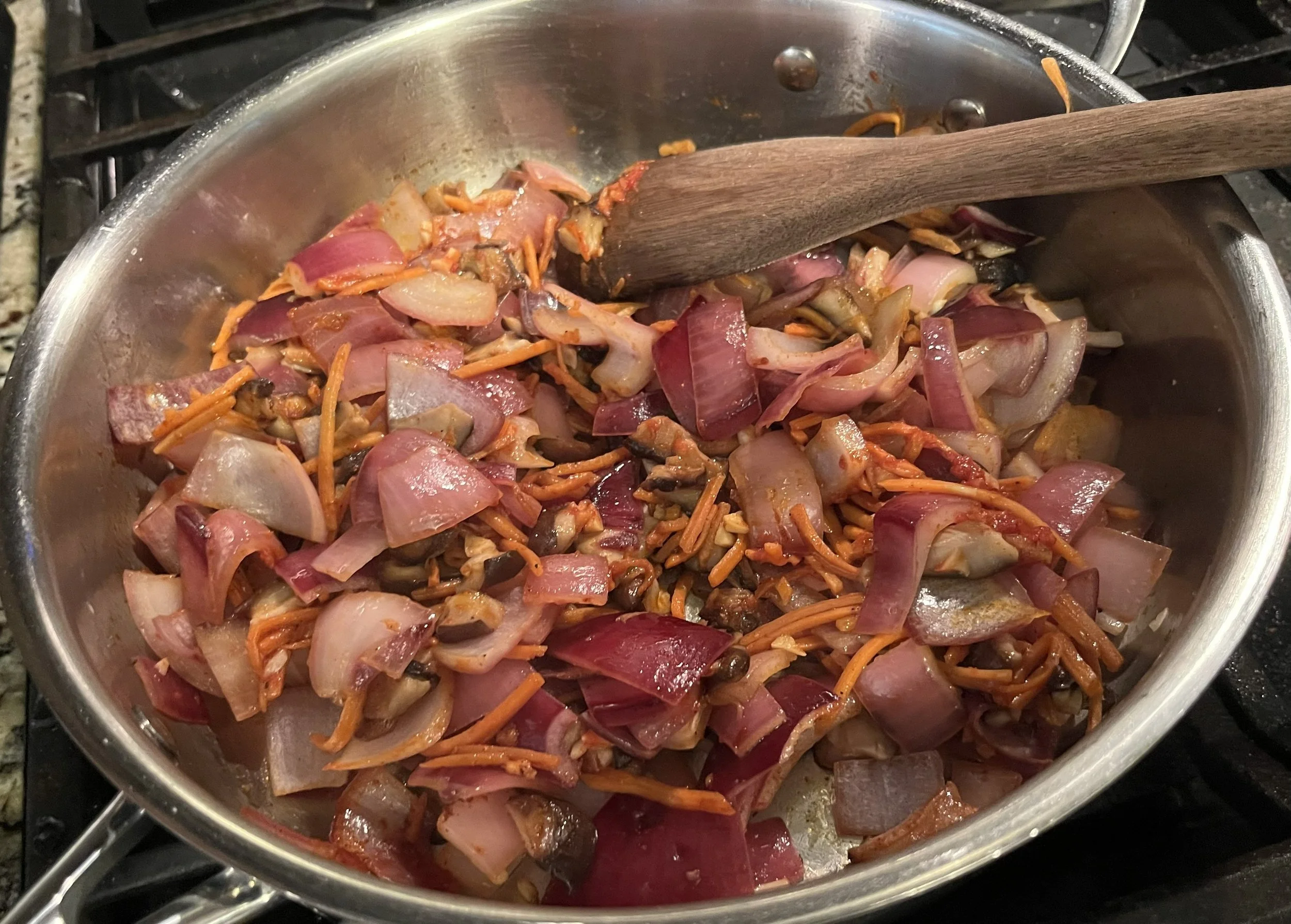
Once your deglazing liquid is in the sauté vessel, deglaze the bottom of the pan by scraping with your wooden spoon. Or a spatula could be good for this technique, as well. After this, you’re ready to simmer the stew.
If using the one-pot method, add the simmering ingredients to the pot (beans, tomato, barley, and stock), or if you’re using a sauté pan, dump the deglazed pan into the stew pot. Mix well and continue to stir with the heat on medium-high until the liquid reaches a simmer. Then reduce the heat before it starts boiling aggressively, which we don’t want.
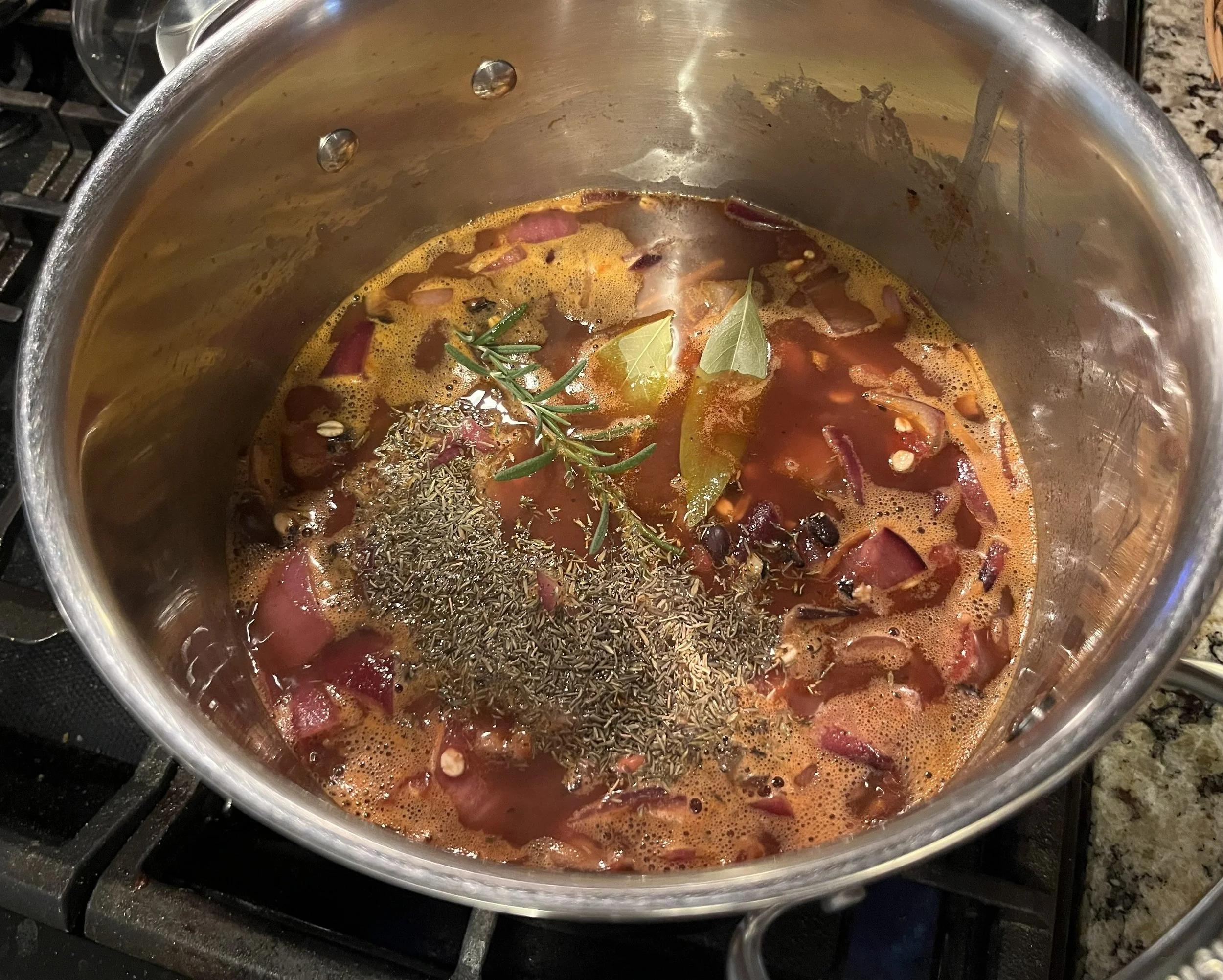
Add the bay and any other herbs and simmer on a lower heat setting (just enough to maintain the simmer). Once you’re confident you have the heat calibrated, place a lid on the pot. Note that this recipe works fine without a lid for a large proportion of (or even the entire) cooking time, if you want a thicker, more porridge-like stew. As you check on it during the simmer time, keep the lid on or off or add liquid, once the barley has hydrated and expanded according to your preferred texture. Personally, I keep the lid off the stew for most of the cook time.
Check back on the stew at least every fifteen minutes and give it the occasional stir, ensuring the temperature is a gentle simmer, and the top layer isn’t getting too dry. Taste the broth occasionally (careful of the temperature, of course) and monitor the salt level. If it tastes salty from the start, due to the use of high-sodium stock and/or canned vegetables, add water and leave a lid on the pot to dilute it. This may also require modification to the recipe, such as omission of the parmesan, to prevent an overpowering salty flavor, so avoid high sodium liquids, if possible. More likely, the broth will taste under salted. Add a small amount at a time. Once again, remember that the parmesan will add more salt at the end, so you don’t need to hit your salt target at this stage. Keep it a little under where you want it to be. You can always add more at serving.
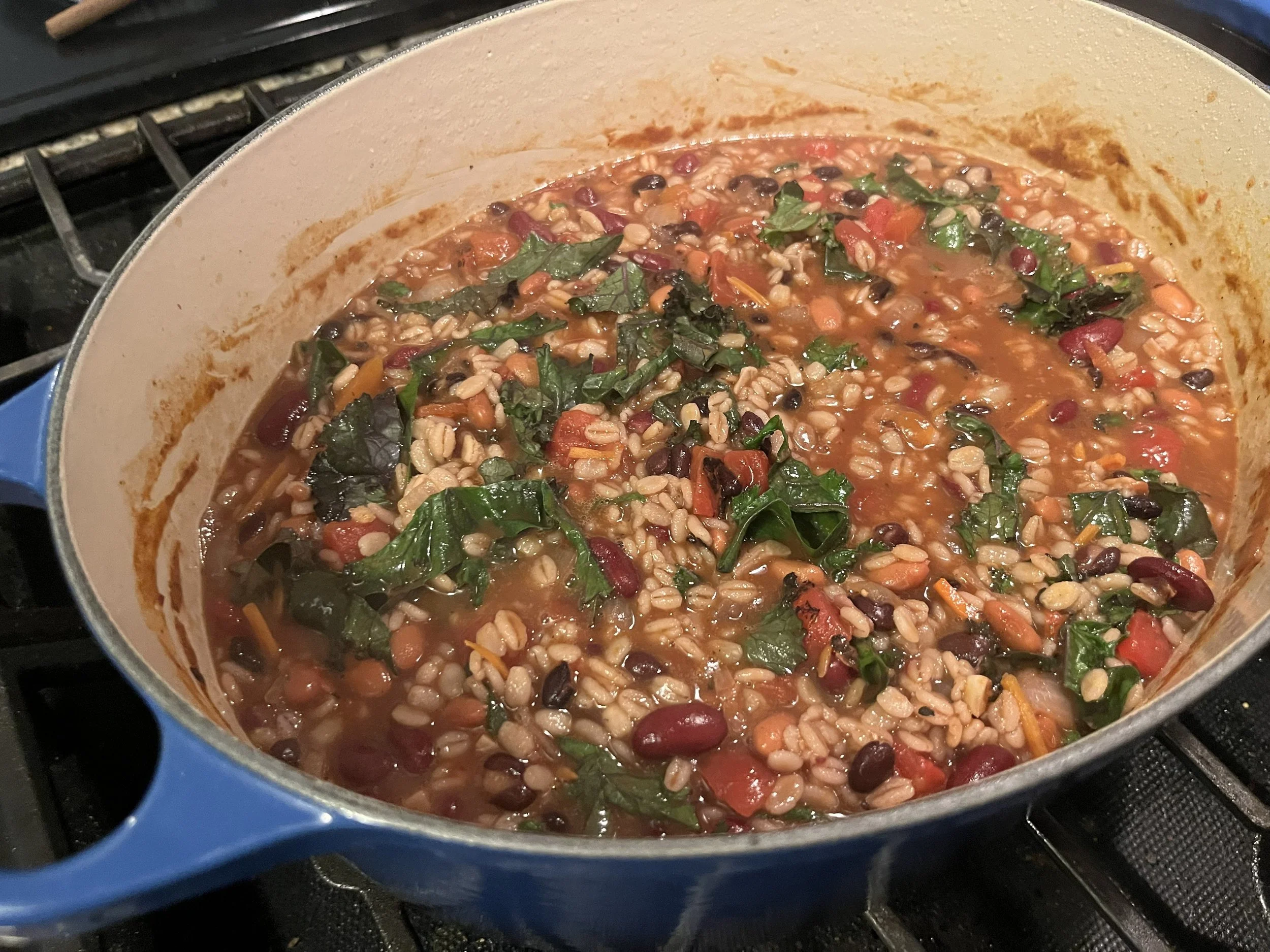
Finish any remaining prep for the kale and parmesan and get the other finishing ingredients ready (Worcestershire, ACV, salt). After 45 minutes of simmering, remove the pot from the heat and add the finishing ingredients. Stir them into the warm stew until well combined, then let it rest for at least five minutes before tasting. Ensure that you cool the stew in your tasting spoon to serving temperature, so as to be able to properly gauge the flavors. Adjust with salt as needed. If desired, you may add a small additional amount of Worcestershire or ACV or add brown sugar to tweak the flavor further, but be careful, and only add very small amounts, so as not to mask the flavors of the main ingredients.
Storage
The stew chills or freezes well, and will keep in the fridge for about 3 days or in the freezer for over 2 months. Chilling or freezing actually improved the nutritional quality of the carbohydrates, as some of the starches become fiber-like resistant starch and stay that way, even after reheating.
The reheated stew may be drier than the day-of portions, since the barley remains thirsty, and will continue to absorb liquid while chilled. You may want to account for this by adding some stock or other liquid when reheating.